Big Dams or Sprinkling Cans?
Everybody in the world knows about big dams. They do irreparable damage to the
environment and the millions of people they displace, but we need to keep building a few of them to feed the nine billion people we expect will live on planet earth when its population stabilizes.

Ten years ago, ten world experts both for and against big dams formed the World Commission on Dams and reached a stunning consensus on the path forward, which the World Bank promptly decided to ignore.
But there has been no World Commission on Buckets and Sprinkling Cans, although some 50 million poor farmers in Asia and Africa use them as their primary source of irrigation.
In fact, the world’s irrigation experts turn up their noses at the very thought that the lowly sprinkling can could be considered a form of legitimate irrigation, and they studiously ignore people who irrigate with buckets and sprinkling cans even when they live and work right under their noses.
Twelve years ago, I was learning everything I could about vegetable markets in Maputo, the capital of Mozambique. Since you usually need irrigation to produce vegetables, I asked an expatriate consultant to the government of Mozambique with a PhD in irrigation and numerous scholarly papers if there was any irrigation within striking distance of Maputo.
“Not ‘til you get about 200 miles north of here,” he said.
“And the canal system there needs millions of dollars of repair work to get it to work effectively again. ”
I thanked him, stepped out of his office, and hailed a cab.
“Is there any irrigation going on around Maputo?” I asked the cab driver.
“Certainly sir. Would you like me to take you there?” he replied.
“How far is it?”
“About 15 minutes. It’s right next to the beer factory.”
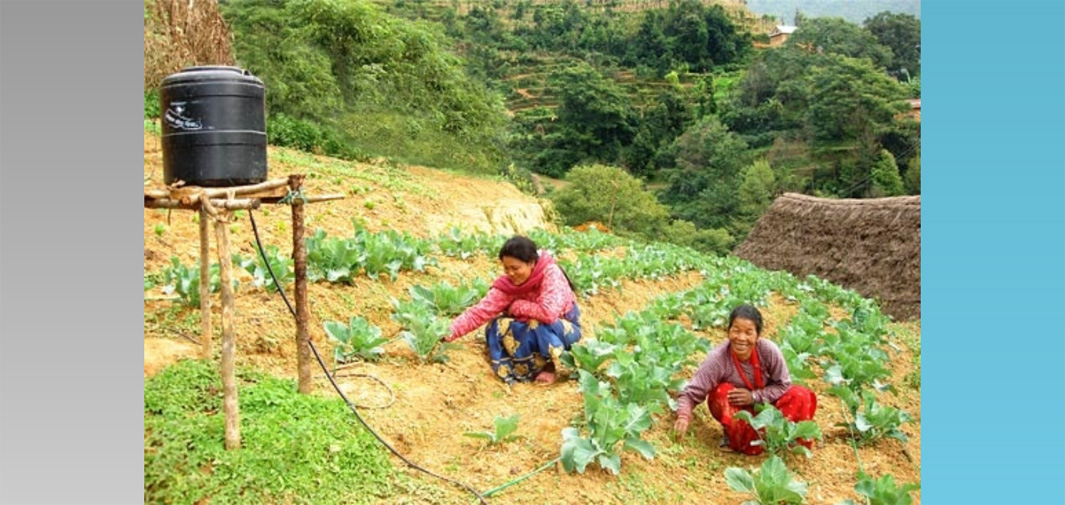
Sure enough, in less than 15 minutes we pulled up to 500 lush green acres filled with vegetables, irrigated by bucket and sprinkling can. Some farmers filled their sprinkling cans from a full creek. Others took advantage of small box-like cisterns filled by gravity from the creek. On their 1/8 acre plots, they grew onions, tomatoes, and all kinds of other vegetables that they sold from small stalls in neighborhood markets.
That afternoon, I went back to the irrigation expert’s office in Maputo.
“I thought you told me there was no irrigation within striking distance of Maputo,” I said.
“That’s right,” he said.
“Well, I just visited 500 acres of irrigated vegetables 15 minutes from here,” I said, with just a tiny trace of righteous indignation.
“Where’s that?” he asked.
“Right next to the beer factory,” I said.
“Oh of course, I know about that,” he said. “But that’s not irrigation.”
“Why not?” I asked.
“Because they only use buckets and sprinkling cans” he said, and stood up, indicating our interview was coming to an end.
“That’s funny,” I said. “I thought irrigation was bringing water to plants.”
And then I knew our interview was truly over.
The trouble is that this is not an isolated case.
In a rare detailed study of primarily bucket and sprinkling can irrigation in the peri-urban area of Kumasi, Ghana in 2001, Gez Cornish and his colleagues from HR Wallingford, a well known UK water consulting firm reported that “—-In the 40 km radius around Kumasi there are estimated to be 12,700 households irrigating at least 11,900 ha..” (For More visit Article – Informal irrigation in the peri- urban zone of Kumasi, Ghana )
In the year before, using numbers prepared by the Food and Agriculture Organization (FAO) the government of Ghana reported that the total irrigated acreage in Ghana was a mere 6,400 ha, a little less than half the acreage irrigated by bucket and sprinkling can alone in the outskirts of just one city in Ghana.
To the experts at FAO and the government of Ghana, irrigation by sprinkling can simply doesn’t exist, so there’s no use learning about it, measuring it, and figuring out how to improve it.
How many more hectares are there in Ghana that are irrigated by sprinkling can and bucket?
Nobody knows and nobody cares.
How many more smallholders earn their primary livelihoods growing vegetables irrigated by sprinkling cans and selling them in nearby towns and cities in Ghana, and in all of Sub Saharan Africa?
Nobody knows and nobody cares.
But if the ratio of 12,700 sprinkling can farmers to 900,000 population of Kumasi holds up for the nine million or so people who live in urban areas in Ghana now, there would be about 120,000 bucket farmers in Ghana today, irrigating about 110,000 ha. This would represent 11 times the 10,000 Ha of formal irrigated acreage reported by the Government of Ghana now.
When I extrapolate this rough calculation to the 270 million or so people who live in urban areas in Sub Saharan Africa now, I come up with a very rough estimate of 36 million farmers who use sprinkling cans and buckets as a primary form of irrigation in Sub Saharan Africa. It could be 50% higher or lower, but it will do for a start. One thing is very clear- there is a very large number of them!
The world is so caught up in debates about big dams and big canal systems that it routinely misses the obvious.
I would take only a tiny fraction of the billions we spend now on big projects that don’t work to do three obvious things to learn about sprinkling can farmers and help them double or triple their productivity and income.
How Sprinkling Can Farmers can improve their Livelihood?
1. Carry out a serious survey of sprinkling can farmers around the world to learn everything there is to learn about what they do now and how they do it.
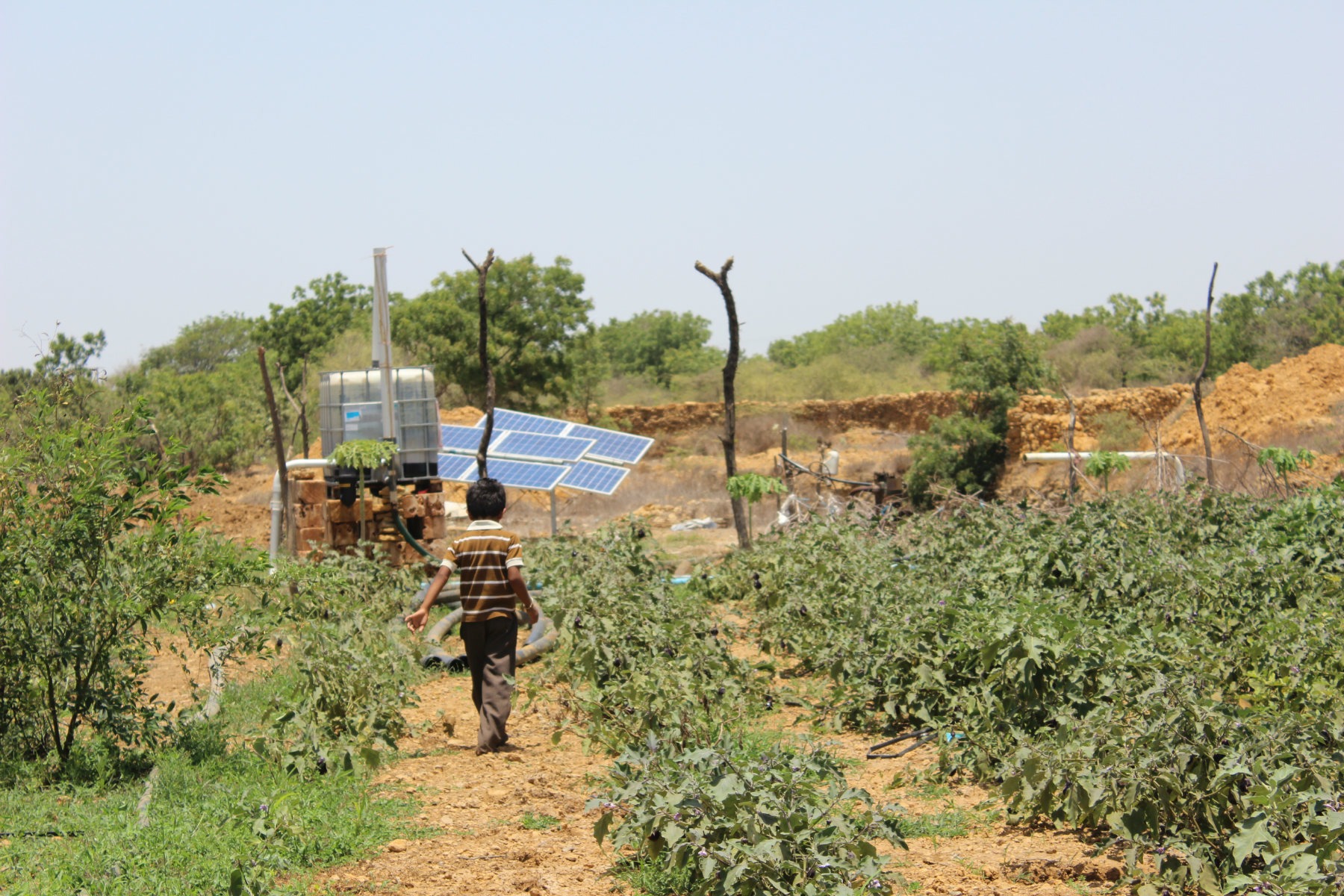
2. Carry out pilot projects in two or three countries to double the income and productivity of Sprinkling Can Farmers by taking advantage of affordable labor saving irrigation tools, like treadle pumps and low cost drip systems, improved farming practices and better access to markets.
3. Rapidly scale up multi-country initiatives to double the income of tens of millions
In next week’s blog, I will talk about what I’ve learned from interviewing bucket farmers about promising ways their harvest and incomes could be dramatically improved.
Three Major Opportunities for Sprinkling Can Farmers to Make More Money
Read More
Death of Appropriate Technology II : How to Design for the Market
The single biggest reason that the appropriate technology movement died and most technologies for developing countries never reach scale is that nobody seems to know how to design for the market.
Over the past 30 years, I’ve looked at hundreds of technologies for developing countries.
Some provided elegant solutions for challenging technical problems. Some were big and clumsy. Some were far too expensive. Some of were beautifully simple and radically affordable.
But only a handful were capable of reaching a million or more customers who live on less than two dollars a day.
If you succeed, against all odds, in designing a transformative radically affordable technology, you still have addressed only 25 % of the problem. The other 75% is marketing it effectively, which requires designing and implementing an effective branding, mass marketing and last mile distribution strategy.
Any competent electrical engineer can design a beautiful solar lantern that provides enough light to read or cook by in a village thatched roof house. But designing it with the features that a poor family is willing to pay for, at a price providing them a 4 month payback from savings in kerosene, batteries and candles, is an entirely different matter.
Designing a branding and marketing strategy and a last mile supply chain that will put it in the hands of a million or more customers is three quarters of the design challenge.
Eight Practical Steps to Design for the Market
1. Interview 25 Likely Customers before you start.
We planned to sell battery charging services to villagers in eastern India using affordable solar technology, but when we interviewed 30 customers in ten remote villages, we learned that there wasn’t enough market demand to justify it. Many villages were being electrified, and what we learned is that when one village gets electricity, the fifty villages around it within a half hour bicycle ride get functional electricity, because villagers prefer to put a battery on a bicycle and plug it in at a village with electricity, to paying more money to a village solar powered battery charging service.
2. Design to a Customer-Derived Target Price-point from the very beginning
The reason US $10 is a sweet spot price point for solar lanterns for customers in developing countries who earn less than $2 a day is that most of them spend $3-$5 a month on kerosene, flashlight batteries and candles. If they save $2 a month after subtracting costs like battery replacement for the lantern, they get their money back in five months, which falls into the 2-300% return on investment most poor customers look for.
3. Select the price/effectiveness Tradeoffs Acceptable to Customers to reach the target price
Government standards for a subsidized solar lantern in India called for 8 days of reserve light for days when the sun didn’t shine. But when I interviewed 25 people who had used solar lanterns in Kenya for a year and asked them what their source of light was before the solar lantern, they said they used kerosene lamps, which they still had. So one trade-off to reach the target price of $10 is to bring the number of days of reserve light to zero. Any rational poor customer will gladly use their kerosene lamp on dark days if they can bring the price of the solar lantern down to what is affordable for them
4. Create a Proof of Concept Prototype
When we designed the first proof of concept prototype for a low cost drip system in Nepal, we simply drilled holes as emitters in black High Density Polyethylene Pipe lateral lines, and let water flow through them from a 55 gallon drum about 2 meters above the ground. Then we put a glass under each emitter and measured how much water came out over a fixed period of time. The proof of concept prototype worked well.
5. If it Works, Put it in the Hands of at Least Ten Customers, learn what’s wrong with it, and fix it.
When we put these prototypes in the hands of ten one acre farmers in the hills of Nepal for one growing season, they told us that water squirted sideways out of the holes away from the plants, so we put plastic sleeves over the holes. Then the plastic sleeves came away from the holes when the lateral lines were shifted, so we designed and extruded a baffle that fit snugly over the holes and didn’t move when the lateral lines were shifted.
6. Design a Branding, Marketing and Distribution Strategy capable of reaching a million customers
With the treadle pump in Bangladesh, we used staff from a commercial marketing firm in Dhaka to create the name Krishak Bandhu, meaning farmers’ friend, which is also now being used in India. We implemented a strategy of recruiting 75 small manufacturers, 3,000 village dealers, and about 3,000 well drillers, each of whom acted in their own economic self-interest to make market and install treadle pumps. Then we launched a national marketing initiative, including Bollywood type movies, to create sufficient volume sales to make each of the small enterprises in the last mile supply chain profitable
7. Field Test the Technology and the Branding, Marketing and Last Mile Distribution Strategy in at least five different villages for at least four months, and modify it from what you learn.
Windhorse International, the new private company I founded, is currently testing our strategy to sell safe drinking water to people without it in ten villages for six months, with a full independent evaluation. We have changed our strategy in at least six important ways already. For example, we introduced attractive jerry cans, but when they fell off the rack of customers bicycles, they dented easily, so we had to double their wall thickness.
8. Scale Up Systematically to Reach at Least a Million Customers
IDE reached 1.5 million customers in Bangladesh simply by replicating the model of manufacturers, dealers, and well drillers supported by IDE staff to reach scale in more and more geographic regions, and putting a lot of emphasis on supporting the Krishak Bandhu brand and national mass marketing campaigns.
Design for the Market: Practical Examples
The following video is a little long, but if you can suffer through it for nine minutes, it describes how three real social enterprises need to change what they are doing to reach a mass market.
Read More
The Death of Appropriate Technology I : If you can’t sell it don’t do it
The appropriate technology movement died peacefully in its sleep ten years ago. Launched in 1973 by Fritz
Schumacher and his lovely book, Small is Beautiful: Economics as if People Mattered in 1973, it inspired politicians as different as Pat Brown in California and Jawarhal Nehru in India, thousands of middle-aged dreamers like me and millions of people from all walks of life around the world.
What happened? How could such an inspiring movement with deep spiritual meaning have produced so little in the way of practical impact?
The appropriate technology movement died because it was led by well-intentioned tinkerers instead of hard-nosed entrepreneurs designing for the market.
Twenty years ago, I sat on a plane next to a young engineer who was very excited about a tool carrier he was designing for poor farmers to use in Africa.
“I’ve designed a new agricultural tool that turns three tools into one: a plow, a cultivator, and a cart,” he said. “You simply bolt the one you need onto a universal I call a tool carrier”
“Thats very exciting” I said. “How much does it cost?”

ITDG's Beautiful Glowstar Solar Lantern originally designed for Africa- its current price starts at $110, far too much for African Villages
“I have no idea,” he said.
“But that’s an interesting question. I’ll have to give it some thought.”
I knew right away that his project was doomed to fail. If you don’t design to realistic customer-derived price points from the very beginning, any tool you design for a poor customer will never be adopted at scale.
The failure of the widely publicized African Tool Carrier Project several years later has now been fully documented. It cost far too much to be affordable to small African farmers and it relied heavily on donor subsidies for distribution. It eventually died after wasting millions of dollars.
Sadly, far too many of the tools developed by the appropriate technology movement are far too expensive to be affordable to the customers for whom they are intended.
It bears repeating: the appropriate technology movement died because it was led by well-intentioned tinkerers instead of hard-nosed entrepreneurs designing for the market.
With its passing, thousands of technically effective, often outrageously expensive tools lie gathering dust on the shelf

ATI's Manual Sunflower Oil Press for Africa, $110 to $200+- It did the job but was too expensive, and more affordable presses took over much of the market
along with the pamphlets, articles and books that describe them and large numbers of appropriate technology journals, books, catalogues and more recently web sites.
As far as I know, only a handful of tools designed by the appropriate technology movement ended up in the hands of more than 10,000 people who need them.
Not surprisingly, many of the organizations that sprang up all over the world inspired by Fritz Schumacher have now either closed their doors or are barely able to keep their heads above water. Buttressed by contributions from a healthy mailing list of admirers of Small is Beautiful – the English appropriate technology organization founded by Schumacher – is still going strong. Presciently, it changed its name from the rather stogy Intermediate Technology Development Group (ITDG) to Practical Action, the virtual absence of which doomed its sister organizations. But most other appropriate technology organizations have not fared so well. Faced with plummeting support from donors disillusioned by scant practical impact, the appropriate technology organizations in Germany GATE, (German Appropriate Technology Exchange) and Holland (TOOL) simply stopped operating. In the U.S., Appropriate Technology International (now EnterpriseWorks Worldwide/VITA) lost its funding from Congress and is a shadow of its former self.
But new movements for the design of technology for the poor are emerging from the ashes. A new generation of designers is creating tools and strategies that release market forces to achieve impact and scale in initiatives to end poverty.
The Cooper Hewitt travelling exhibit, called Design for the Other 90%, showcases some of these new designs and university courses like Jim Patell’s Design for Extreme Affordability at Stanford and Amy Smith’s D-Lab at MIT are beginning to teach it.
What is required to address what went wrong in the appropriate technology movement is nothing less than a revolution in the teaching and practice of design, focused on market-driven methods to meet the needs of the 90% of the world’s customers bypassed by current designers and international businesses. The ruthless pursuit of affordability is an essential component of this design revolution, which in many ways stands on the shoulders of the appropriate technology movement. Most importantly, to be successful, the revolution in design for the other 90% has to develop disciplined ways to design for the market.
Paul on Design For the Market
How to make charcoal briquettes from agricultural waste Amy Smith
Read More
Paul is on Vacation this Week, and an Introduction to Three of Paul’s Organizations
Paul Polak is taking a well deserved break this week, but will be back and writing next week. We wanted to take this opportunity to introduce those of you who are new to the work Paul has done to three of the organizations Paul has founded of co-founded. IDE, D-REV and most recently Windhorse International are three organizations that test the ideas written about in Paul’s revolutionary book Out of Poverty.
IDE (International Development Enterprises)
IDE’s origins as a formal organization lie in a visit to a Somalian refugee camp in 1982. It was there that founder Paul Polak noticed a critical lack of transport limiting the economic opportunities of refugees who were relying on manual transportation for all commodities. Following the principle “in technology, simplicity is the ultimate sophistication,” IDE re-engineered the local donkey cart and interested local artisans in manufacturing one with a more efficient center of gravity, using abandoned car parts for affordability. The donkey carts were a success as more than 500 were sold, producing $1 million of net income for cart owners. … Read More on IDE’s history
Paul Co-Founded D-Rev in order to be a part of a revolution in how Designers approach the 90% of the world that goes virtually under served by product designers. D-Rev is helping develop courses and developing ground breaking products that serve $2 dollar a day and less customers. For more visit the Design Revolutions Web Site…
Windhorse International
Paul founded Windhorse International as a way to prove that there is a vast untapped market that has been virtually ignored. Seeking to serve this vast market and make multi-national companies take notice of respectable profit margins. Designs are needed but to realize the vision and dream Paul has carried of a billion people leaving poverty business and quality design needs to reach scale. Windhorse International is still not being publicized, but is looking to make some important contributions through it’s products and approaches. Windhorse is in Beta testing for it’s products and seeking funding to reach scale efficiently and effectively. (For more check out this article in Bloomberg Businesss Week)
Read More


Recent Comments